
COP30: The Forest, the Fossils and the Fine Print
Looking back at COP30 (2025).
Brazil invited the world to the Amazon to discuss the climate emergency. Just weeks earlier, its environmental regulator had authorised a new offshore oil exploration well. Welcome to the complicated business of saving the planet.
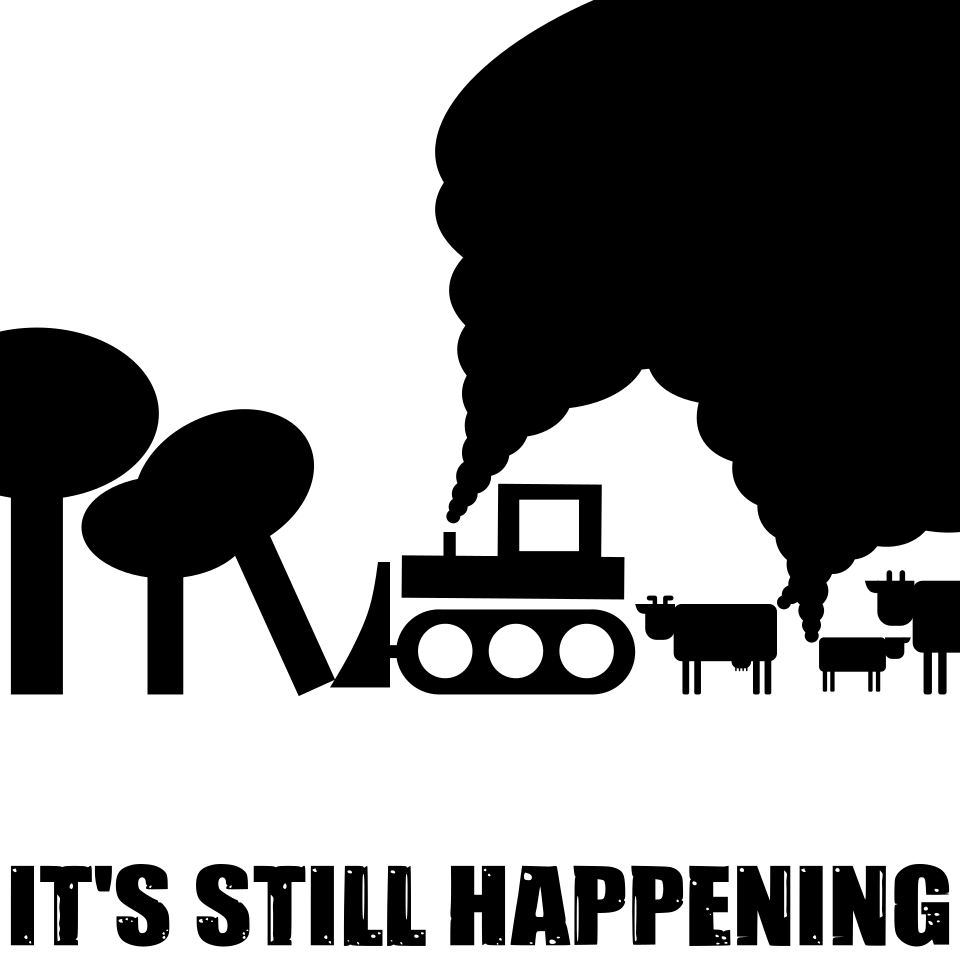
In November 2025, the world's climate negotiators descended on Belém, Brazil, for COP30. The Brazilian presidency billed the gathering as a conference of implementation: less congratulating ourselves for promises made, more evidence that somebody was actually doing something.
It was a reasonable ambition. A decade after the Paris Agreement, the world had accumulated an impressive collection of climate declarations. Delivering them remained a considerably less fashionable pastime.
But before examining what negotiators agreed, we should examine the host.
The Amazon: Now With Added Petroleum
Brazil arrived at COP30 with a rather complicated environmental inheritance.
Under Jair Bolsonaro, Amazon deforestation had surged. Under Luiz Inácio Lula da Silva, the figures were moving substantially in the other direction.
Credit where it is due. Trees left standing are considerably more useful than trees converted into agricultural land.
But Brazil apparently decided that protecting the rainforest and expanding its petroleum frontier need not be mutually exclusive ambitions.
On 20 October 2025, just weeks before welcoming the world to climate negotiations in Belém, Brazil's environmental regulator, Ibama, granted Petrobras a licence to drill an exploratory well in the Foz do Amazonas Basin, offshore from Amapá.
An important distinction: this was exploratory drilling offshore, not a licence to clear-cut the rainforest, and not authorisation for commercial oil production. Petrobras said the well was intended to establish whether economically viable deposits existed. Ibama said the licence followed an extensive environmental review and additional emergency-response safeguards.
Nevertheless, the Lula administration supported opening the exploration frontier. Environmental groups criticised the decision as inconsistent with Brazil's climate ambitions.
Nothing says commitment to the energy transition quite like searching for the next oilfield immediately before hosting a conference about moving beyond fossil fuels.
The government and Petrobras argue that development, energy security and environmental safeguards can coexist. That proposition deserves examination rather than dismissal.
But it also invites an awkward question.
If every country intends to finance its transition by expanding fossil-fuel production first, precisely when does the transition begin?
Perhaps the next COP could include a calendar.
The Good: Some Actual Work
COP30 was not an exercise in doing absolutely nothing, however tempting that description might be.
Negotiators agreed on further adaptation-finance ambition, including a goal to triple adaptation finance by 2035. They advanced work on a just-transition mechanism and measures to assess adaptation progress. The Brazilian presidency also championed practical implementation initiatives.
For climate-vulnerable countries, these are not footnotes. Adaptation finance helps determine whether communities can prepare for hazards rather than merely pay to recover from them.
Brazil also had a credible conservation story to tell: deforestation in the Legal Amazon had fallen significantly from its earlier peak. That matters, and it should not be erased simply because other parts of the government's environmental programme deserve scrutiny.
The Bad: The Roadmap That Missed the Agreement
The central political dispute was whether COP30 would turn the COP28 commitment to transition away from fossil fuels into a clearer collective plan.
More than 80 countries supported a roadmap. The final negotiated outcome did not contain one.
Instead, the presidency committed to work on roadmaps outside the formal UN negotiating text, including one addressing fossil fuels and another addressing forests.
By October 2026, the COP30 presidency had published a voluntary fossil-fuel transition roadmap. It provides a framework for considering different countries' circumstances, but it is not a negotiated binding timetable.
There is a difference between agreeing that a destination exists and agreeing how to reach it.
And there is an even larger difference between a voluntary document and actual reductions in fossil-fuel dependence.
The Ugly: Implementation, Pending
The final Belém outcome reflected the compromises of a multilateral process. It preserved cooperation and advanced several technical and financial issues. It also left a central question about fossil fuels unresolved in the negotiated text.
The contradiction is not unique to Brazil. Many countries call for rapid global decarbonisation while defending domestic fossil-fuel investment as necessary for jobs, revenues or energy security.
Those arguments cannot simply be waved away. But neither should they be accepted without asking how much additional extraction is compatible with the transition governments say they want.
COP30's language of implementation is useful precisely because it supplies a test: what happens after the delegates go home?
The Caribbean Question
For Jamaica and other small island developing states, a climate conference is not judged solely by the elegance of its communiqués.
The relevant questions are practical. Does adaptation finance become available on affordable terms? Can governments strengthen coastal protection, water systems and critical infrastructure? Do international decisions reduce the risks that vulnerable communities face, or merely schedule another round of negotiations?
Tripling adaptation finance by 2035 could matter enormously. But a target is not the same as accessible funding, and a funding pledge is not the same as a completed project.
The Caribbean has heard promises before.
It deserves delivery.
Conclusion: A Forest of Promises
COP30 offered genuine progress on adaptation, implementation and cooperation. It also exposed the limits of consensus on fossil fuels.
Brazil's reduced deforestation deserves recognition. Its support for new offshore oil exploration deserves scrutiny. Both statements can be true.
Perhaps that is the defining image of Belém: a conference held near one of the world's great forests, arguing over how to leave fossil fuels behind, while the host country prepared to look for more of them.
The question is not whether the delegates cared about the future.
It is whether the decisions they made will change it.
Sources and further reading
- United Nations, COP30 closing summary
- UK House of Commons Library, What was agreed at COP30?
- Carbon Brief, COP30 key outcomes
- Petrobras, 20 October 2025 exploratory drilling licence announcement
- Agência Brasil, Ibama licensing process and responses
- COP30 presidency, voluntary transition roadmap (October 2026)